Trainings

Hardware security and router hacking

Hardware Hacking 101

WiFi Router and IoT Security

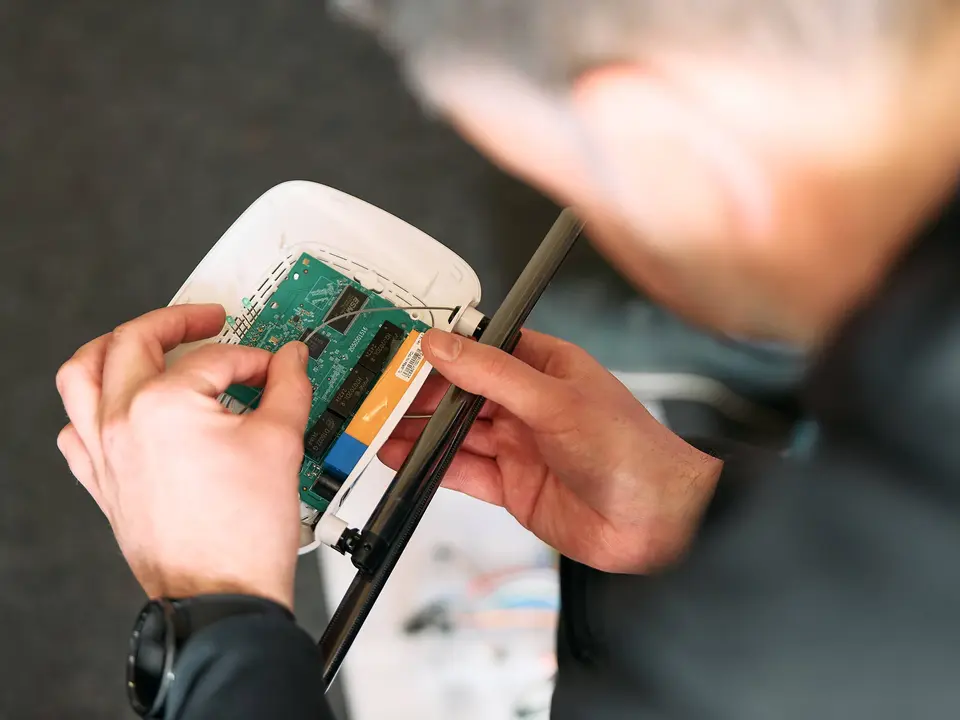
Open a real WiFi router, get a root shell over UART, dump its flash chip and dig through the firmware. All hardware is provided.

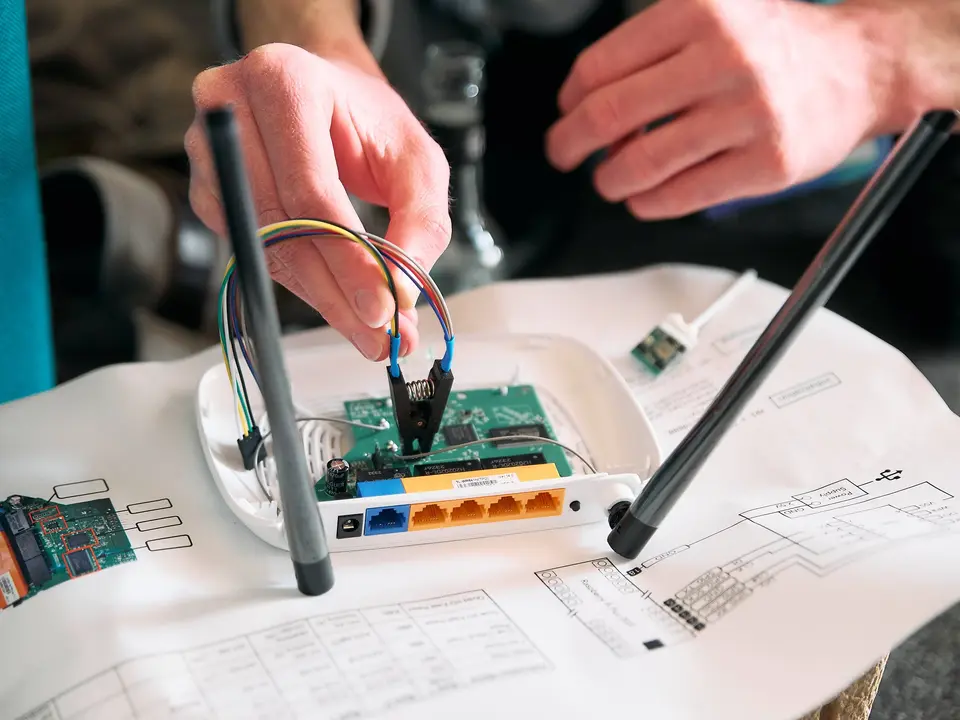
A chip clip attached to the flash chip of an opened WiFi router

What you will be able to do

  • Map an IoT device's attack surface and pull internal photos and documents through its FCC ID
  • Find UART pins with a multimeter, measure the baud rate and get a root shell through a Raspberry Pi Pico
  • Read a boot log for the memory layout, flash partitions and leaked secrets
  • Read SPI flash with your own MicroPython script, then dump the whole chip with flashrom
  • Extract the filesystem with binwalk and search it for credentials
  • Sniff and attack Bluetooth Low Energy, from GATT basics to cracking legacy pairing (full day)

The scenario

Attack path on a WiFi router: a Raspberry Pi Pico connects to the UART pins for a root shell and clips onto the SPI flash to dump the firmware, which binwalk unpacks to reveal credentials and keys. WIFI ROUTER root shell chip clip dump binwalk Attacker Raspberry Pi Pico UART pins SoC SPI flash Firmware Secrets passwords, keys Attack path on a WiFi router: a Raspberry Pi Pico connects to the UART pins for a root shell and clips onto the SPI flash to dump the firmware, which binwalk unpacks to reveal credentials and keys. WIFI ROUTER root shell chip clip dump binwalk Attacker Raspberry Pi Pico UART pins SPI flash SoC Firmware Secrets passwords, keys
  1. Look up the router's FCC ID for internal photos, then find the SoC, the flash chip and the UART pins on the board.
  2. Wire a Raspberry Pi Pico to UART for a root shell, then clip onto the SPI flash and dump the firmware.
  3. Unpack the firmware with binwalk and hunt for passwords and keys. The full day continues with Bluetooth Low Energy.

Agenda

  1. Map the attack surface

    Where IoT devices break, from debug interfaces and flash storage to the network, the radio and the companion app.

  2. Recon the board

    Find the router's FCC ID, download its internal photos and identify the SoC, RAM, flash and debug pins.

  3. Get a root shell over UART

    Find the pins with a multimeter, decode a capture in PulseView, then wire up a Raspberry Pi Pico, read the boot log and dump the admin password hash.

  4. Dump the flash

    Learn how SPI flash talks, write a MicroPython script that sends raw read commands, then dump the whole chip with flashrom.

  5. Dig through the firmware

    Split the dump into its partitions, extract the filesystem with binwalk and search it for credentials.

  6. Hack Bluetooth Low Energy

    In the full-day version. Scan and talk to devices, sniff traffic with Sniffle and Wireshark, crack legacy pairing with crackle and solve a BLE capture-the-flag.

Who it is for

  • Embedded, firmware and product security engineers
  • Penetration testers who want to add hardware to their scope
  • Developers curious about what their devices reveal

Before you join

  • Basic programming, networking and Linux command line
  • No soldering or electronics background needed

From past runs

Other trainings

All trainings