Trainings

CI/CD supply-chain security

Poisoned at the Source

Hacking the Software Supply Chain in Your CI/CD Pipeline

Attack a fictional company's software supply chain, trace the incident it causes, then harden the edge you used.

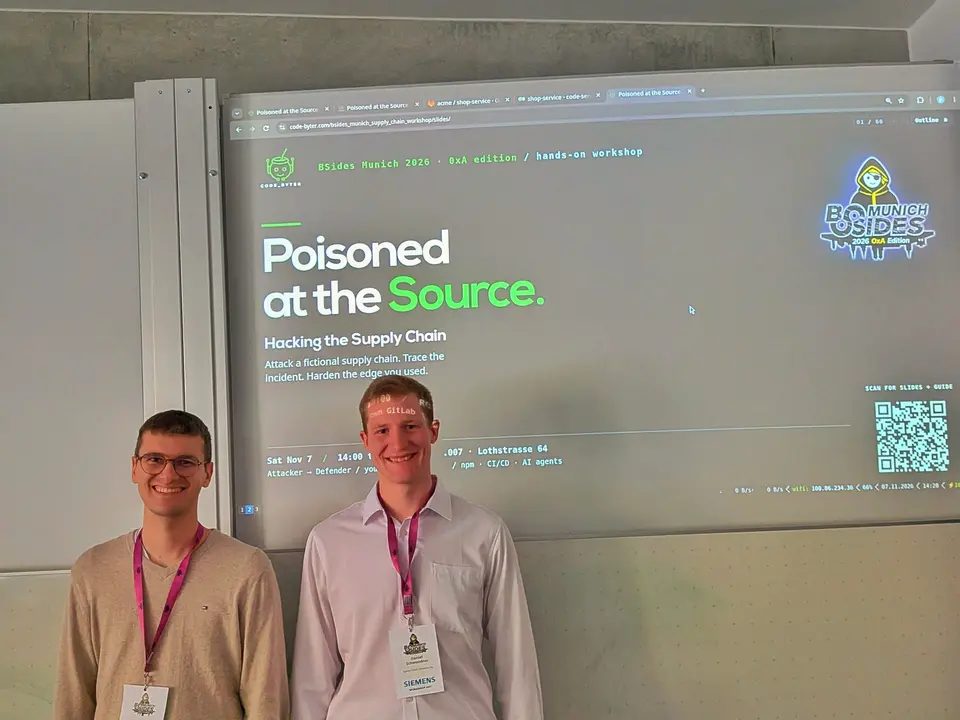
Daniel and Samuel in front of the Poisoned at the Source title slide at BSides Munich 2026

What you will be able to do

  • Trace a package from publisher and registry mirror to the CI runner and the developer machine where it executes
  • Reproduce a maintainer takeover, dependency confusion and an install-hook payload fetched at install time
  • Compare the blast radius of the same payload on an ephemeral CI runner and on a persistent developer machine
  • Respond to a seeded incident in the right order, evidence first, persistence before revocation, and rebuild the timeline
  • Write a detection rule against your own attack and test whether it survives a renamed package
  • Choose one hardening control and plan how to prove it works

The scenario

A poisoned npm release reaches a company's developer laptop and GitLab CI runner, which deploys the web shop. The install hook fetches a payload and sends secrets back to the attacker. COMPANY GitLab npm install leaked token payload in · secrets out Attacker npm poisoned release Developer laptop Web shop Repository CI runner A poisoned npm release reaches a company's developer laptop and GitLab CI runner, which deploys the web shop. The install hook fetches a payload and sends secrets back to the attacker. COMPANY GitLab npm install leaked token payload in · secrets out Attacker npm poisoned release Laptop Repository CI runner Web shop
  1. A leaked token lets the attacker publish a poisoned npm release.
  2. Developer laptops and the CI runner install it.
  3. Its install hook pulls the payload and sends secrets back, including the runner's path to the web shop.

Agenda

  1. Run the pipeline

    Edit, commit, open a merge request and watch your own GitLab pipeline deploy a web shop. How npm resolves one install.

  2. Frame the threat

    The five stages of a package attack, recent cases like axios and Shai-Hulud, and recon of what the target installs.

  3. Take over a package

    Validate a leaked publish token, ship a poisoned release whose payload is fetched live at install, and see dependency confusion happen.

  4. One chain, two detonations

    The same package runs on the CI runner and in a developer's editor. Map what each one inherits.

  5. Harvest and exfiltrate

    Switch the payload after publishing, collect credentials from both machines and validate them.

  6. Respond to the incident

    An incident is seeded during the break. Collect evidence, hunt persistence, revoke in the right order and build the timeline.

  7. Detect and harden

    Write a detection rule, replay a mutated package against it, and map one control to the attack edge it closes.

Who it is for

  • Developers and DevOps or platform engineers who own build pipelines
  • Application security and product security engineers
  • Incident responders and blue teams who need to handle a poisoned dependency

Before you join

  • Comfortable with git and a terminal
  • Basic idea of how npm or pip installs packages. No prior attack experience needed

From past runs

Other trainings

All trainings

TrainingHalf day or full day

Hardware security and router hacking

Hardware Hacking 101: WiFi Router and IoT Security

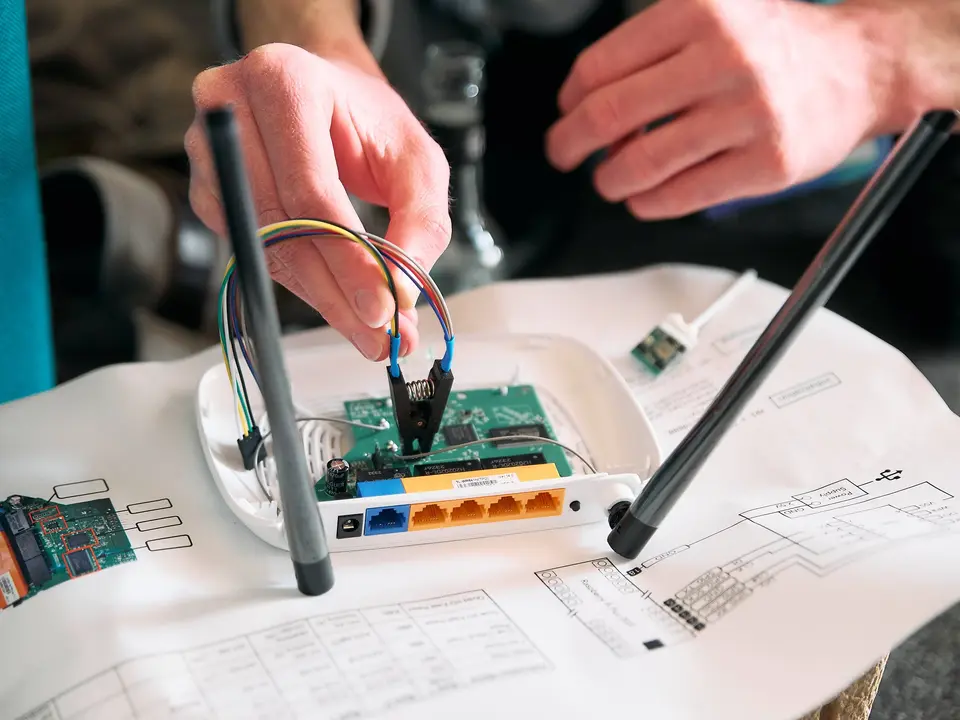
Open a real WiFi router, get a root shell over UART, dump its flash chip and dig through the firmware. All hardware is provided.

  • Hardware hacking
  • IoT security
  • Embedded Linux
  • Firmware analysis

BSides Munich 2024, Social Developers Club 2025 Agenda and details